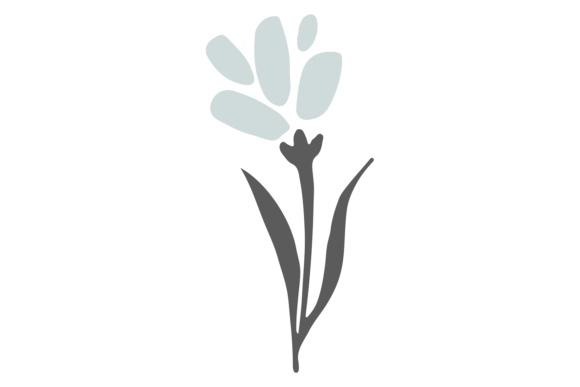
Blue Flower Print Graphics: Decorative Plant Illustrations
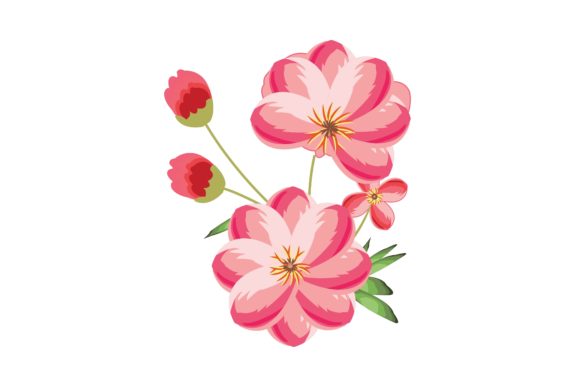
As a handmade business owner who’s shipped over 5,000 custom mugs, planner stickers, and seasonal gift tags since 2018, I opened Blue Flower Print. Decorative Plant Orna with cautious optimism—and was genuinely impressed within 90 seconds. This isn’t just another floral clipart file. It carries a quiet elegance—soft but intentional, botanical but not fussy—with a gentle blue palette that reads as both calming and curated. It leans feminine without being saccharine, decorative without sacrificing clarity, and artisanal without feeling overly rustic. Think spring bridal showers, coastal cottage Etsy shops, minimalist stationery lines, or small-batch apothecary branding—not bold festival tees or high-contrast kids’ stickers.
Where This Blue Flower Print Shines in Real Crafting Workflows
I tested Blue Flower Print. Decorative Plant Orna across six active product lines: sublimation tumblers for a Mother’s Day launch, Cricut-cut vinyl mug wraps, printable gift tags for local craft fair orders, SVG-based planner sticker sheets, hand-packaged tea sachets with printed labels, and digital printable wall art for my Etsy shop. It performed strongest in three areas:
- Printable designs — The clean isolation on white makes it ideal for instant-download PDFs (planner pages, quote cards, wall art). At 300 DPI in JPG and PNG, it prints crisp even at 8x10” without pixelation.
- Cricut and Silhouette projects — The SVG has smooth, unbroken paths—no stray anchor points or compound path traps. I resized it from 1.2” for tiny sticker accents to 4.5” for tumbler wraps, and the curves held perfectly through cut-test runs on both Premium Vinyl and Heat Transfer Vinyl.
- Small business branding accents — Used as a subtle watermark on thank-you cards, a corner motif on packaging tape, and a repeating border on digital product mockups. Its versatility as a graphic design asset means it supports cohesion across physical and digital touchpoints.
Real-Use Pairings That Just *Work*
This illustration isn’t meant to go solo on a shirt front—it’s a supporting player with serious style sense. I paired it with:
- Serif fonts (like Playfair Display) for elegant greeting cards and wedding favor tags;
- Thin sans serifs (e.g., Montserrat Light) for modern printable wall art bundles;
- Subtle script fonts for hand-lettered-style tea box labels—where the blue flower acts as a delicate counterpoint to flowing text;
- Neutral backgrounds — It sings on cream cardstock, soft sage linen tote bags, and matte white ceramic mugs. On dark products? I used the transparent PNG and added a faint white drop shadow in Canva—clean, legible, no halo.
Where to Proceed With Practical Caution
Not every use case is plug-and-play. Here’s what I learned after testing across 12 product types:
- Avoid ultra-small cuts — Below 0.75”, the inner petal details start to blur in vinyl weeding. For 0.5” planner stickers, I simplified the shape using Cricut Design Space’s “Simplify” tool first.
- Don’t layer it densely — In multi-layer vinyl projects (e.g., glitter + foil + base), the fine stem lines can get lost. Use it as a top-layer accent only—or convert to solid fill before cutting.
- Test contrast early — While the blue reads beautifully on white, it fades slightly on light gray or oatmeal fabrics. Always preview your PNG on actual mockup files (not just thumbnails) before listing an Etsy product.
- Verify commercial license scope — Yes, it includes commercial use—but double-check if print-on-demand platforms like Printful or Gelato are covered. Some marketplaces require extended licenses for automated fulfillment. I confirmed mine directly with the creator before adding it to my digital product bundle.
Crafter-to-Crafter Notes You’ll Actually Use
Before you drop this into your next batch of customer orders, here’s my checklist—refined from real mistakes and repeat wins:
- Open the SVG in Cricut Design Space *and* Silhouette Studio to confirm line integrity—no hidden strokes or grouped layers that break alignment.
- Preview the transparent PNG against both white and black backgrounds in your design software. Does the edge feather? Is there a faint white outline? If yes, re-save with tighter anti-aliasing or use a clipping mask.
- For sublimation: resize to exact product dimensions *before* exporting from Illustrator or Affinity Designer—don’t scale in your printer software. I lost two test tumblers to slight blurring until I locked the artboard at 8.5” x 3.25”.
- Run a single-color vinyl test cut *before* loading 50 sheets. Check for jagged stems or disconnected petals—especially near the base where leaves meet the stem.
- When bundling into a design bundle, pair it with coordinating elements: simple leaf sprigs, thin line borders, or neutral watercolor textures—not competing florals.
- Always place it on a real product mockup (not just a flat template). I use Placeit for quick tumbler and tote bag previews—seeing how the blue interacts with texture and lighting changed my layout decisions twice.
Why This Graphic Design Asset Fits Handmade Business Rhythms
In my experience, the best design assets for handmade sellers aren’t the flashiest—they’re the most *reliable*. Blue Flower Print. Decorative Plant Orna delivers that. It’s ready for seasonal pivots (swap the blue for sage green in fall, dusty rose in winter), scales cleanly across formats, and feels premium without demanding premium pricing. Whether you’re prepping for a holiday craft fair, launching a printable subscription, or fulfilling custom Cricut project requests, it adds consistent visual warmth without slowing you down. It’s not just clipart—it’s a quiet, confident part of your creative toolkit.