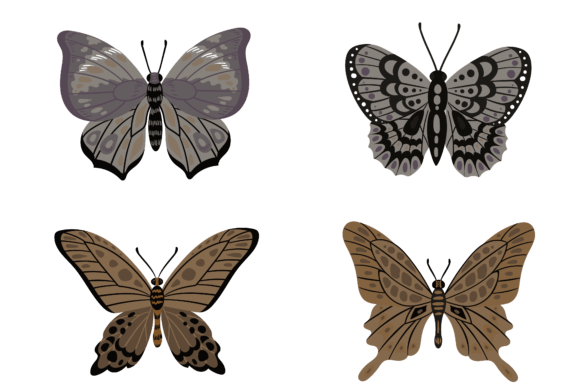
Butterfly Decorative Design: Graphics & Illustrations for Brand Warmth
As a graphic designer who’s built brand identities for handmade businesses, seasonal Etsy shops, and local wellness studios, I recently evaluated Butterfly Decorative Design for a real client project: a spring-themed botanical tea line launching on Shopify and Instagram. My goal wasn’t just to find “pretty” — it was to source a graphic design asset that could elevate packaging, social media graphics, and printable product inserts without compromising clarity or brand cohesion.
A First Impression That Feels Intentional, Not Generic
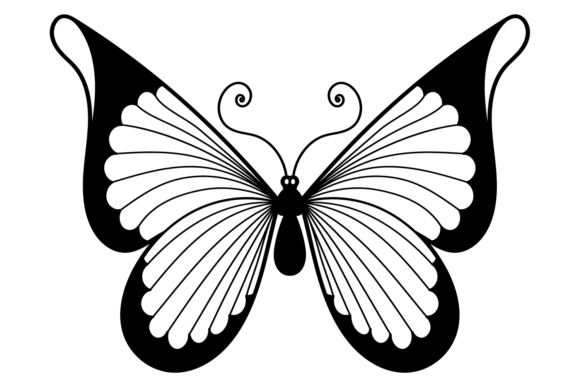
Opening the file set, I was struck by how the butterfly balances delicate linework with confident negative space — not overly ornate, not stripped-down minimal. It reads as modern design with organic warmth: soft curves, subtle wing texture, and gentle asymmetry. This isn’t clipart. It’s an illustration that breathes — ideal for brands rooted in nature, mindfulness, self-care, or artisanal craft. For my tea client, it instantly reinforced the mood we’d defined in our creative brief: “calm celebration,” not loud festivity.
Where It Shines in Real Client Work
Butterfly Decorative Design performs exceptionally well where visual storytelling matters most:
- Product mockups — layered over kraft paper bags or matte ceramic mugs, it adds artisanal charm without overwhelming the product;
- Packaging design — used as a corner accent on tea box labels or as a repeating pattern on inner sleeve liners (scaled down thoughtfully);
- Social media graphics — especially Pinterest pins and Instagram carousels where its gentle shape guides the eye toward headline text;
- Printable design — perfect for downloadable wall art bundles, seasonal planners, or greeting cards sold on Etsy;
- Cricut project and sublimation design use — the clean vector paths in the AI, EPS, and SVG files cut precisely and scale flawlessly for iron-on transfers or vinyl decals;
- Brand identity support — not as a logo (it lacks typographic integration), but as a signature supporting element across email headers, website banners, and loyalty program badges.
Where to Use It With Intention — Not Assumption
This isn’t a universal drop-in asset. Its strength lies in context, not versatility. Avoid using Butterfly Decorative Design in:
- Small-scale applications like favicon icons or app interface elements — fine details blur below 200px wide;
- Crowded layouts where competing textures or high-contrast photography compete for attention;
- Minimalist branding systems built on strict geometry or monochrome palettes — its organic flow can feel tonally dissonant;
- Corporate or B2B marketing visuals where visual trust relies on precision, authority, or neutrality;
- Any layout where readability of body copy is compromised — always test with your chosen typeface at final size.
Design Judgment in Action: Practical Notes from My Workflow
Before clearing Butterfly Decorative Design for client use, I ran these checks — and recommend you do too:
- Test contrast rigorously: placed over light cream, soft sage, and charcoal backgrounds — the JPG rendered cleanly, but I confirmed the SVG preserved crisp edges on dark modes;
- Preview at scale: zoomed out to 25% to assess visual weight in hero sections; zoomed in to 300% to inspect anchor points in the AI file — no stray nodes or raster artifacts;
- Font pairing audit: layered it beside serif (Playfair Display), sans serif (Inter), script (Dancing Script), and display fonts (Cinzel) — it harmonized best with gentle serifs and airy sans serifs, not heavy grotesques;
- Commercial license verification: confirmed the seller grants broad commercial rights — essential for print-on-demand, t-shirt design, and client-branded merchandise;
- Black-and-white conversion test: printed a grayscale version — the wing gradients held tone separation, making it viable for letterpress or monochrome packaging;
- Mockup realism check: dropped it into a real mug mockup and a sticker sheet template — the proportions and spacing felt authentic, not “stock.”
Why It Fits the Creative Marketplace — and Your Next Project
In a sea of overdesigned clipart and underdeveloped PNGs, Butterfly Decorative Design stands out as a considered digital product. The inclusion of AI, EPS, SVG, and JPG gives true flexibility: vector for scalability and editing, JPG for quick web placement, SVG for interactive web design or Canva templates. At 1920px × 1280px, the canvas size supports high-res blog headers and full-screen social ads — no upscaling required.
For small business branding, it delivers emotional appeal without sacrificing professionalism. For content creators and bloggers, it adds visual rhythm to editorial design without demanding attention away from the message. For crafters and Cricut users, it’s production-ready — no tracing, no cleanup, no licensing guesswork. And for designers building a design bundle for digital sellers? This is the kind of illustration that makes a collection feel curated, not compiled.
The Bottom Line for Client-Ready Use
Butterfly Decorative Design isn’t a shortcut — it’s a thoughtful tool. When matched to the right project (a handmade business, seasonal campaign, or wellness-focused brand), it deepens visual trust, reinforces emotional resonance, and quietly elevates perceived quality. Used with intention — tested, scaled, paired, and licensed correctly — it becomes more than decoration. It becomes part of the story.