Decorative Color Arch in Scandinavian St
A Rainbow That Feels Like Morning Light—Not Just Another Clipart Arch
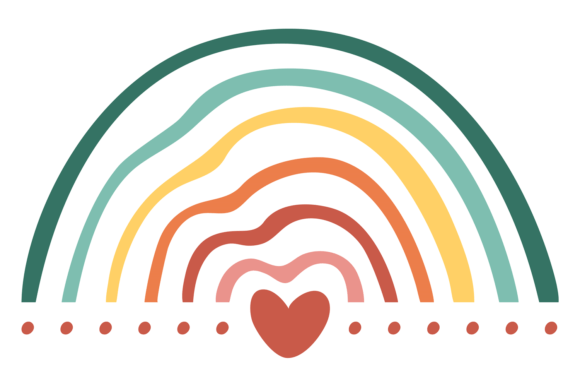
First glance at Decorative Color Arch in Scandinavian St isn’t about “cute” or “trendy”—it’s about quiet confidence. The arch shape is soft, not rigid; the rainbow isn’t loud or saturated like a candy wrapper, but gentle and intentional—each band spaced with breathing room, each hue calibrated for harmony, not contrast. It reads as joyful *and* grounded—a hallmark of true Scandinavian design, not just a pastel filter slapped on a stock rainbow. As an embroidery designer who’s stitched hundreds of “rainbow” motifs for baby onesies, boutique tea towels, and Etsy-apron collections, I immediately sensed this one wouldn’t get lost in the wash—or in the clutter of a handmade shop listing.
Where It Shines: Real Projects, Not Just Pixels
I tested Decorative Color Arch in Scandinavian St as the centerpiece for a custom embroidered cotton tote bag—intended for a local nursery boutique. Stitched at 3.8" wide on medium-weight canvas with a light tear-away + cut-away hybrid stabilizer, it held its shape beautifully. The clean curves translated smoothly into satin stitch arcs; no jagged edges, no thread nesting in the corners. Because the design is isolated and vector-based (EPS/SVG), scaling up for a pillow cover or down for a baby cap felt safe—not guesswork. On sweatshirt fleece? It kept its airiness without drowning in pile. On a linen tea towel? The open spacing between colors let the fabric texture peek through just enough to feel artisanal, not flat.
This isn’t a design that begs for heavy embellishment. It works as a standalone embroidered patch, a subtle chest motif on a unisex kids’ sweatshirt, or a sweet accent above a name on a personalized baby blanket. For Etsy sellers, it adds instant warmth to digital product previews—especially when layered over soft mockups (think oatmeal knit or off-white canvas). As a machine embroidery design, it leans into simplicity without sacrificing personality—exactly what small shop owners need when balancing speed, quality, and brand voice.
Where to Pause—and Why
That same gentleness becomes a consideration on certain fabrics and applications. On thin, stretchy knits (like lightweight t-shirts), the open bands can blur if stabilizer isn’t precise—so I’d recommend testing on scrap first and possibly adding a light topping stabilizer. On dark fabric, the lightest pastel bands (especially the pale yellow and mint) may need a slight thread color adjustment—off-white instead of pure white, for example—to retain clarity without looking washed out. And while it’s charming on curved surfaces like caps, keep the placement high and centered: the arch’s gentle curve doesn’t adapt well to extreme crowns or brims where distortion pulls the bands unevenly.
Also worth noting: because Decorative Color Arch in Scandinavian St is delivered as Illustrations (EPS, JPG, SVG, transparent PNG), it’s not a ready-to-stitch embroidery file by default. If you’re sourcing it for commercial embroidery, you’ll need to digitize it—or confirm whether a pre-digitized version is available separately. Never assume a graphic equals an embroidery file. Always check.
What It Does for Your Finished Product—Beyond Aesthetics
This design quietly lifts perceived value. On a handmade product, it signals care—not just “I stitched something,” but “I chose something thoughtful.” Customers notice that. A customer buying a personalized gift for a new parent doesn’t just see a rainbow—they feel the calm, the intention, the *Scandinavian* ethos of simplicity and warmth. That builds trust faster than any description. For craft business owners, it supports brand consistency across product lines: use it on a kitchen towel, then echo the same palette in your packaging ribbon or social media banners. For holiday embroidery or wedding gifts, it reads festive but never kitschy—ideal for modern nurseries, gender-neutral baby showers, or minimalist home goods.
It also plays well with others. Pair it with clean sans-serif monograms for custom apparel, or layer it subtly behind hand-embroidered text on a linen apron. As a digital embroidery file asset (once digitized), it’s versatile enough for both personal projects and scalable small-batch production—provided licensing allows commercial use. Always confirm licensing before selling finished items or bundling it into digital product kits.
Practical Notes from My Hoop to Yours
- Test first: Run it on scrap fabric matching your final garment—especially for textured or dark materials.
- Check thread contrast: View your chosen thread colors against both light and dark backgrounds using a black-and-white mockup.
- Review stitch density: Gentle curves often need slightly lower density than sharp angles—watch for puckering in the inner bands.
- Confirm hoop size: Even though it’s simple, the full arch width may require a 5x7 hoop minimum—don’t assume 4x4 will suffice.
- Inspect small details: Zoom in on the ends of each band—clean termination matters for professional-looking satin stitch.
- Use proper stabilizer: Medium-weight cut-away works best for stable fabrics; add topping for napped or loosely woven textiles.
- Verify use rights: Since it’s categorized as Graphics, double-check whether redistribution or derivative commercial use is permitted.
Final Thought: It’s Not Just a Rainbow—It’s a Mood You Can Stitch
Decorative Color Arch in Scandinavian St won’t shout—but it will linger. In a market flooded with busy, over-digitized motifs, its restraint is its strength. It fits naturally into real-life embroidery projects: the quiet pride of a handmade baby item, the curated charm of a small shop’s seasonal collection, the confident minimalism of modern custom apparel. It asks for attention not through volume, but through clarity—and that’s exactly what makes it worth your time, your thread, and your customer’s shelf space.