Abstract Flower Graphics: Ornamental Illustrations
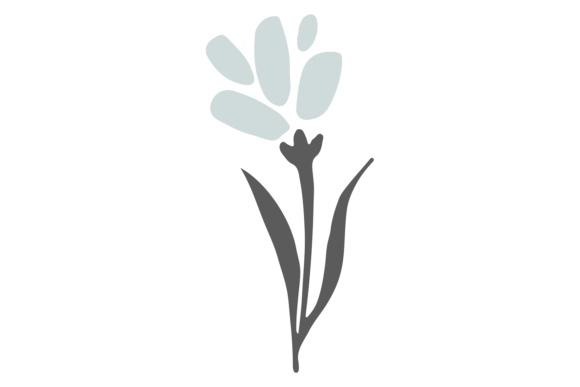
As someone who’s launched over 200 digital product listings across Etsy, Creative Market, and Shopify—and built three profitable Canva template shops—I opened Abstract Flower in Decorative Ornament Style expecting another generic floral clipart. Instead, I got something quietly versatile: a balanced, hand-guided ornament with spring freshness but zero cliché. It reads as both timeless and contemporary—elegant enough for wedding stationery, grounded enough for rustic nursery prints, and clean enough to scale into sublimation mugs or tumbler wraps without visual noise.
The mood is calm, intentional, and quietly feminine—not overly sweet or cartoonish. Think botanical meets heritage engraving: layered petals, subtle line weight variation, and organic symmetry that still holds up at small sizes. It doesn’t scream “spring”—it *suggests* renewal through shape and flow. That makes it safer for year-round use than hyper-seasonal florals, especially for sellers building evergreen digital download shops.
Where This Graphic Design Asset Fits Naturally
I tested Abstract Flower in Decorative Ornament Style across six real product categories before finalizing my next Etsy collection. Here’s where it performed strongest:
- SVG products for Cricut users: The vector paths are smooth and well-structured—no stray anchor points or overlapping fills. It cut cleanly on my Maker 3 at 3" width, and scaled to 12" for tote bag appliqués without distortion.
- Printable wall art & planner stickers: The white background + transparent PNG made it drop-in ready for Canva templates. Paired with a light serif (like Playfair Display) or soft script font, it elevated minimalist quote prints instantly.
- Greeting cards and invitation suites: Used as a corner motif or border element, it added decorative rhythm without competing with text. Worked especially well in muted sage-and-cream palettes.
- Sublimation designs for mugs and tumblers: At 300 DPI, the JPG and EPS files held detail even when wrapped around curved surfaces in mockup tools. No pixelation in highlight areas.
- Digital paper packs and scrapbooking kits: Tiled subtly as a watermark or full-repeat pattern, it gave texture without overwhelming—unlike busier florals that muddy layered layouts.
- Social media graphics for small business branding: Added as a subtle header accent in Instagram story templates, it reinforced visual hierarchy while feeling handmade, not stock.
How It Strengthens Product Presentation
This isn’t just a standalone illustration—it’s a consistency tool. I dropped Abstract Flower in Decorative Ornament Style into my listing mockups (mug, notebook, printable planner), used the same SVG as a divider in my Canva template previews, and repeated the green tone across all thumbnail backgrounds. Result? A cohesive seasonal bundle that felt curated—not assembled.
For Etsy sellers, that cohesion directly impacts click-through. Shoppers scrolled past my older listings with mismatched fonts and random clipart—but paused on the preview showing this flower repeated across three product types. It signaled intentionality, which builds trust faster than any description.
It also raised perceived value. Bundling the SVG + transparent PNG + EPS with matching color swatches and usage tips made customers feel they were buying a system, not just a file. That justified a $12 price point versus $7 for single-use clipart.
Where to Use It Thoughtfully
Don’t force it everywhere. I learned this the hard way: it lost clarity at under 1" in sticker sheets, especially when printed on matte vinyl. The fine inner lines blurred. For tiny planner stickers, I simplified it manually in Illustrator—keeping only the outer petal silhouette.
Avoid placing it directly over busy textures or dark backgrounds unless you’ve verified contrast. The green is mid-tone—not high-saturation—so it recedes on charcoal or navy without a subtle drop shadow or white stroke. Also skip cramming it into text-heavy Canva templates; its decorative nature competes with readability.
And if your Cricut project requires ultra-precise cutting (e.g., intricate iron-on transfers), inspect the SVG layer order first. While clean overall, one nested group needed ungrouping to prevent accidental double-cuts on the stem curve.
Practical Seller Checks Before Publishing
Before adding Abstract Flower in Decorative Ornament Style to any live listing, I ran these five checks:
- Previewed the transparent PNG over white AND black mockup backgrounds to confirm edge integrity and contrast.
- Test-printed the JPG at actual size on my Epson ET-2850—verified no banding in gradient-like petal transitions.
- Imported the SVG into Cricut Design Space and ran a “cut preview” at multiple sizes (1", 4", 8") to check path continuity.
- Opened the EPS in Illustrator and confirmed all strokes were outlined and no linked assets remained.
- Reviewed the commercial license: yes, it permits finished goods (t-shirts, mugs, digital templates), but prohibits reselling the raw files as standalone clipart—so I labeled my bundle clearly as “commercial-use design assets,” not “clipart pack.”
I also organized customer files by use case: “SVG_Cricut,” “PNG_Transparent,” “EPS_HighRes,” and included a simple PDF guide with pairing suggestions (e.g., “Try with Montserrat for modern branding, or Great Vibes for invitations”). Small touches—but they reduce support requests and increase review scores.
Final Verdict for Creative Entrepreneurs
If you sell printable designs, build Canva templates, run a print-on-demand shop, or create digital paper packs, Abstract Flower in Decorative Ornament Style is a low-risk, high-flexibility graphic design asset. It’s not flashy—but that’s its strength. It supports rather than dominates. It scales across formats, adapts to brand voices, and quietly elevates listings without demanding attention.
For Etsy sellers launching a spring-themed collection? Yes—use it as your anchor illustration. For Canva template creators refreshing Q2 offerings? Absolutely pair it with neutral palettes and clean typography. For Cricut crafters building SVG bundles? Include it as a “versatile ornamental option” alongside bolder motifs.
Just remember: its power lies in restraint. Let it breathe in your layouts. Match it with intentional fonts and consistent color echoes. And always—always—test it in context before publishing. Because in digital product creation, the quiet assets often sell the longest.