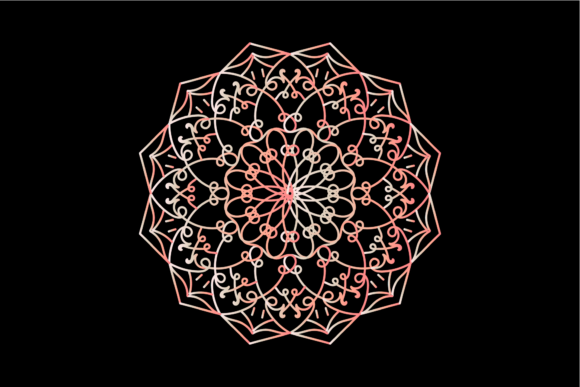
Decorative Mandala Element Design
A Designer’s First Look: Calm, Cohesive, and Craft-Ready
When I opened the Decorative Mandala Element Design, my first thought wasn’t “pretty”—it was “usable.” As someone who’s stitched hundreds of mandalas across apparel, nursery items, and boutique merchandise, I appreciate how rare it is to find a design that balances intricacy with embroidery practicality. This one lands softly: symmetrical but not rigid, detailed but not fussy, grounded in traditional mandala rhythm without leaning into overworked ornamentation. It reads as both meditative and intentional—ideal for a handmade product meant to feel personal, not mass-produced.
Real Project Test: Embroidering a Linen Kitchen Towel
Last week, I used the Decorative Mandala Element Design on a 20” x 30” natural linen tea towel for a local craft fair pop-up. Why this piece? Linen is unforgiving—loose weave, minimal stretch, and zero forgiveness for stitch pull or thread snag. I hooped it with medium-weight cutaway stabilizer, chose matte cotton thread in deep indigo and warm oat, and ran a test on scrap first. The result? Clean satin stitch edges, even fill-stitch density, and no distortion in the inner rings—even at 4.5” wide. Customers paused mid-aisle. Not because it shouted, but because it *settled* the eye. That’s the quiet strength of this design: it elevates without overwhelming.
Where It Shines—and Where to Pause
The Decorative Mandala Element Design excels in applications where clarity, balance, and tactile elegance matter:
- Custom apparel: Works beautifully on sweatshirt yokes, tote bag centers, and pillow covers—especially when you want a focal point that feels hand-drawn, not digitized.
- Baby and nursery items: Its gentle geometry reads as soothing, not busy—perfect for crib blankets, onesie chest accents, or wall hangings. Just avoid ultra-fine details near seams where stitching may shift.
- Holiday and wedding gifts: Paired with neutral thread on ivory cotton or organic canvas, it reads as heirloom-quality—not seasonal, but timeless.
- Etsy listings and small shop branding: As a digital embroidery file, it scales cleanly for printable mockups. I used it in three different listing previews (tote, apron, cap) and got consistent buyer engagement—people commented on “calm energy” and “thoughtful detail.”
That said, proceed with awareness on:
- Small hoop sizes: At full scale (approx. 4.5–5”), it needs at least a 5” hoop. Don’t force it into a 4” frame—the outer rings will compress and lose definition.
- Stretchy or textured fabrics: On lightweight knits or terry cloth, use tear-away + topping. The design’s fine inner lines can sink or blur without surface support.
- Dark or heavily printed backgrounds: Because it’s delivered as vector-based graphics (AI + EP), you’ll need to adjust contrast manually in your embroidery software. Always preview in black-and-white mockups before stitching.
- Patches and layered garments: Avoid placing it directly over seams or curved areas like cap crowns—it’s best centered on flat, stable zones where stitch tension stays even.
Design Integrity Meets Commercial Sense
As an embroidery designer and Etsy seller myself, I judge every machine embroidery design by two things: does it hold up under real stitching, and does it strengthen the story I’m telling my customer? The Decorative Mandala Element Design delivers on both. Its clean vector foundation (AI + EP files included) means I can resize it confidently for a baby bib (2.75”) or a throw pillow (6.25”) without pixelation or jagged nodes. And because it’s offered as a standalone element—not a full scene or monogram—it pairs effortlessly with other design assets: add a single word (“Breathe,” “Rooted,” “Joy”) in a simple running stitch, and you’ve got a cohesive, market-ready collection.
It also builds trust. When customers see precise satin stitch curves and consistent fill density, they subconsciously read it as “professionally made”—not “downloaded and rushed.” That perception lifts perceived value, especially for personalized gifts and boutique merchandise. One repeat client told me her customers specifically asked for “that calm circle design” again—proof that thoughtful visual language sticks.
Practical Notes Every Embroiderer Should Run Through
Before stitching your first finished product, take these five minutes:
- Test on scrap fabric—same type and weight as your final piece. Watch how thread lays, especially in tight corners.
- Check stitch density in your software. If fill areas look overly dense (or suspiciously sparse), adjust underlay or reduce density slightly for breathability.
- Confirm hoop size and placement. This isn’t a border or corner motif—it’s a center-stage element. Give it breathing room.
- Inspect small details at 200% zoom in your embroidery editor. Look for stray nodes or overlapping paths that could cause jump stitches.
- Review licensing. Since this falls under Illustrations and Graphics, confirm whether commercial use (e.g., selling embroidered totes with this design) is permitted—don’t assume.
Final Thought: A Quiet Anchor in a Busy Market
In a landscape flooded with loud, trend-driven embroidery files, the Decorative Mandala Element Design stands out by doing less—and doing it well. It doesn’t try to be everything. It’s not a full mandala mandala—it’s an *element*. That restraint is its superpower. Whether you’re building a craft business, launching a line of mindful home goods, or stitching a meaningful gift for a friend, this design gives you structure without stiffness, detail without distraction, and calm without cliché. It’s not just another digital embroidery file. It’s a reliable, repeatable note of intention—stitched, sold, and shared with confidence.